Two Academy Awards — and the farm boy who loved Buttercup.
William Goldman
William Goldman (1931–2018) spent the better part of seven decades writing — novels, plays, and the screenplays that won him two Academy Awards, for Butch Cassidy and the Sundance Kid and All the President's Men. To fantasy readers, though, he is the man behind The Princess Bride: the 1973 comic fairy tale he later turned into the much-loved 1987 film.
What makes him a kindred spirit for cosy readers is the mischief. Twice — in The Princess Bride, and again in The Silent Gondoliers — he wrapped his own story inside a fib, presenting it as his trimmed-down 'abridgement' of a classic by one S. Morgenstern, an author who never existed. It is warmth and a wink at once.
If you are wondering where to start, or how his books fit together, the short answer is that his cosy titles stand alone — so you can begin wherever you like and read them in any order. Below is the best of him, with the fairy tales first.
Farm boy loves girl, pirates and giants and a six-fingered swordsman get in the way, and the narrator keeps interrupting to tell you which dull bits he's cutting. It's an adventure and a sly love letter to adventures at once. Read it when you want to grin the whole way through.
★★★★☆ · 4.25 on Goodreads
£9.99 paperback
Where to start
Start with The Princess Bride. It is far and away his most famous book, a self-contained comic fairy tale of adventure and 'true love' that asks no prior reading of you, and of all his work it is the one most at home on a cosy-fantasy shelf.
William Goldman’s books
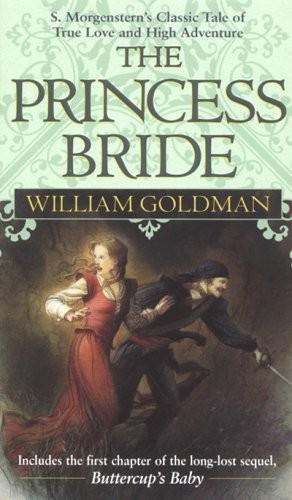
The Princess Bride 1973
The farm boy Westley, his beloved Buttercup, and a tale of swordfights, giants and 'true love' — handed to us as Goldman's abridgement of a (fictional) S. Morgenstern. He wrote the 1987 film's screenplay too, and the book is wittier still.
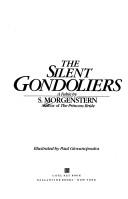
A gentle, whimsical illustrated fable, published under the S. Morgenstern name, that invents a tender reason the gondoliers of Venice supposedly no longer sing. The quiet companion to The Princess Bride.
Adventures in the Screen Trade 1983
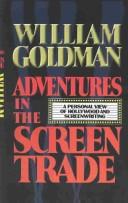
His candid memoir and guide to writing for Hollywood, and the source of that much-quoted line that, in the movie business, 'nobody knows anything'. Not fantasy, but a pleasure to overhear.
Marathon Man 1974
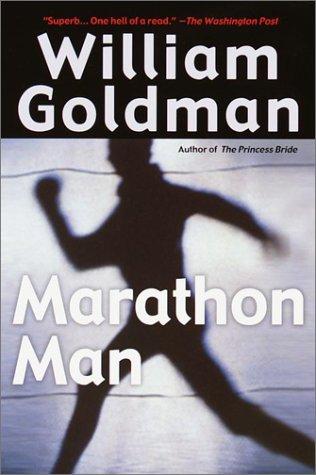
A taut conspiracy thriller — a graduate student pulled into a deadly plot around a fugitive Nazi war criminal. Goldman wrote the 1976 film. A sharp turn from the fairy tales.
Magic 1976
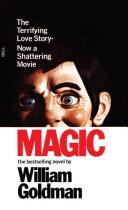
A psychological horror novel about a ventriloquist whose bond with his dummy curdles into something sinister. He adapted it for the 1978 film.
Brothers 1986
His last published novel and the only true sequel he wrote — returning to the espionage and danger of Marathon Man. Read it after that one.
The Temple of Gold 1957
His debut: a coming-of-age novel following a restless, self-destructive young man in mid-century America. Where the seven-decade career began.
Good questions
What are William Goldman's books in order?
He never wrote a fantasy series, so his cosy titles are standalones you can read in any order. The Princess Bride (1973) and The Silent Gondoliers (1983) share his playful S. Morgenstern framing and pair nicely either way round. The one true sequel in his bibliography is the thriller Brothers (1986), which follows Marathon Man (1974).
Was The Princess Bride a book before it was a film?
Yes — the novel came first, in 1973, and the film arrived in 1987. Goldman wrote the screenplay himself.
Is there a sequel to The Princess Bride?
No — Goldman never wrote a follow-up, and his cosy-fantasy titles stand alone. If you'd like more of the same spirit, The Silent Gondoliers shares the Morgenstern conceit and the gentle whimsy.
Who is S. Morgenstern — is he a real author?
He's a fiction. Goldman invented S. Morgenstern as a 'found manuscript' conceit, presenting both The Princess Bride and The Silent Gondoliers as his own abridgements of the imaginary author's work.
Did William Goldman write the screenplay for the Princess Bride film?
He did — Goldman adapted his own 1973 novel for the 1987 film.
What else did William Goldman write?
Plenty beyond the fairy tales: the thrillers Marathon Man (1974) and its sequel Brothers (1986), the psychological horror Magic (1976), his debut The Temple of Gold (1957), and Adventures in the Screen Trade (1983), the Hollywood memoir that gave us 'nobody knows anything'. The closest companion to The Princess Bride, though, is The Silent Gondoliers.
 Wry And RomanticStorybook Charm
The Princess Bride
Wry And RomanticStorybook Charm
The Princess Bride