Forty-one Discworld novels, and you can begin almost anywhere.
Terry Pratchett
Sir Terry Pratchett (1948–2015) wrote the forty-one Discworld novels — comic fantasy that runs from The Colour of Magic in 1983 to The Shepherd's Crown, published in 2015 after his death. Along the way his books sold more than a hundred million copies in forty-three languages, and he was knighted for services to literature in 2009.
What keeps readers coming back isn't the jokes alone, though there are a great many of those. It's the kindness underneath them: a city watch full of misfits, three witches who know exactly what they're about, Death taking an unexpected interest in the people whose time is up. If you've ever wondered which of his books to start with, the happy answer is that there's no single correct order.
Discworld is best read not as one long shelf but as several smaller ones. The novels gather into character strands — the Witches, Death, the City Watch, Rincewind, Tiffany Aching, Moist von Lipwig — and most readers pick a strand and follow it in publication order rather than marching through all forty-one in a row.
A drunk captain, a dwarf, and an earnest six-foot lad raised by dwarves are all that stand between Ankh-Morpork and a summoned dragon. Pratchett turns a tired old city and its hopeless coppers into something you'd defend with your life. Read it when you want to laugh and then, unexpectedly, care.
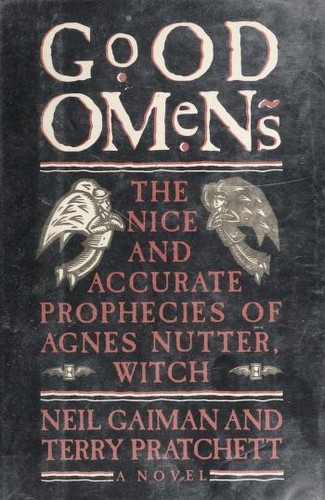
An angel and a demon have grown rather fond of Earth and would quite like the world not to end, so they mislay the Antichrist and muddle through. It's the Apocalypse done as a warm, daft farce, stuffed with footnotes and good manners. Read it when you need cheering up about humanity.
★★★★☆ · 4.24 on Goodreads
£9.99 paperback
Where to start
Begin with Guards! Guards! (1989), the first City Watch novel and one of the most reliably recommended ways in. It reads as a complete story — the down-at-heel Night Watch of Ankh-Morpork against a summoned dragon — and introduces Sam Vimes, Carrot and the running city cast without asking you to have read a word of Discworld first. Mort and Wyrd Sisters make equally happy starting points; we'd gently steer newcomers away from The Colour of Magic as a first book, since its parody is more of an acquired taste.
Terry Pratchett’s books
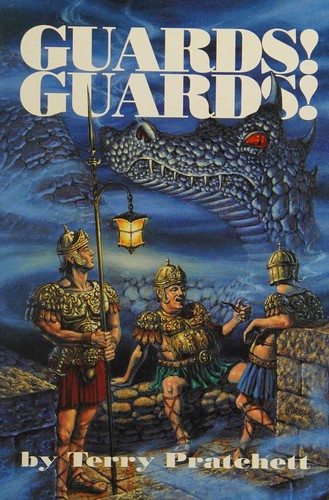
Guards! Guards! 1989
The first City Watch novel: Ankh-Morpork's hapless Night Watch must cope with a dragon someone has summoned over the rooftops. It's where Sam Vimes and Carrot arrive, and the easiest door into the whole Disc.
Pratchett and Neil Gaiman send an angel and a demon into reluctant partnership to stop the apocalypse, after the newborn Antichrist is misplaced. Warm and very funny — a comfort read for when you'd like the end of the world to go well.
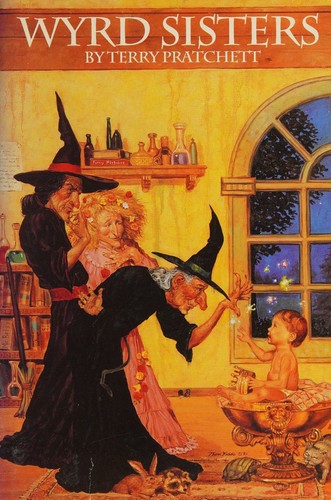
Granny Weatherwax, Nanny Ogg and Magrat Garlick get tangled up in a royal succession, in a plot that affectionately parodies Macbeth and Hamlet. The witches at their best, and a fine place to start their strand.
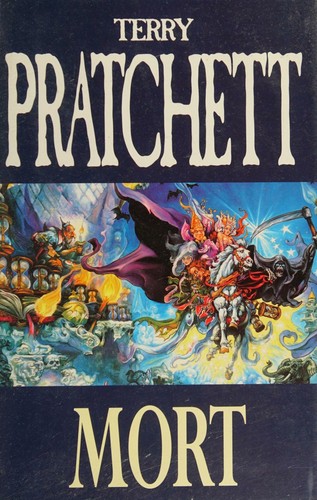
Mort 1987
The first novel to put Death front and centre: he takes on a gangly teenage apprentice named Mort, then leaves him to cover the job — with consequences for the natural order of things. Often recommended as a first Pratchett.
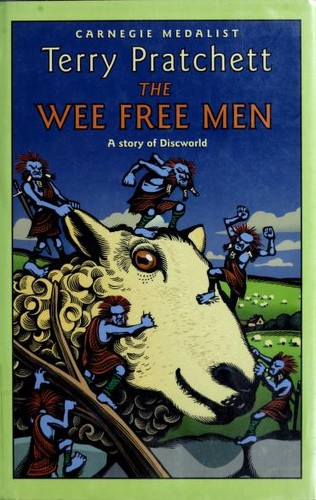
The Wee Free Men 2003
A nine-year-old trainee witch, Tiffany Aching, and the tiny, rowdy blue Nac Mac Feegle set out to rescue her brother from the Fairy Queen. The opening of the Tiffany Aching young-adult books, and a good one to hand a younger reader.
Going Postal 2004
Con man Moist von Lipwig is sentenced to run Ankh-Morpork's derelict Post Office and revive the city's mail. Self-contained, and the first of the Moist von Lipwig books — a brisk place to begin if you like a caper.
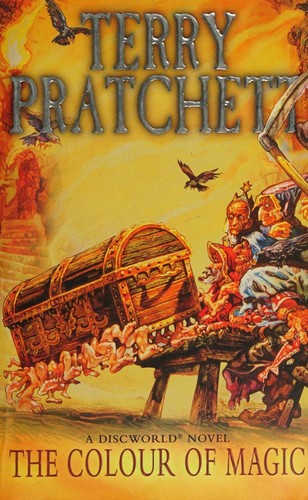
The Colour of Magic 1983
The very first Discworld novel, following the inept wizard Rincewind as he reluctantly guides the Disc's first naive tourist, Twoflower, through one misadventure after another. More of an acquired taste than a first port of call — but the place it all began.
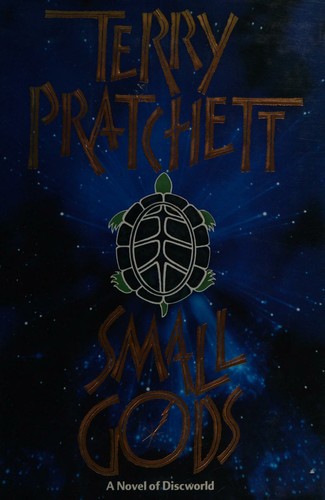
Small Gods 1992
A standalone in which the great god Om finds himself stuck in the body of a tortoise, with a single genuine believer left to his name. Sharper than the cosier Discworld books — its inquisition and persecution cut closer to the bone — but much admired.
Good questions
What order should I read Terry Pratchett's Discworld books in?
You can read all forty-one in publication order from The Colour of Magic (1983), but most readers pick a character strand — the Witches, Death, the City Watch, Rincewind, Tiffany Aching or Moist von Lipwig — and follow that in order. Each strand works as its own self-contained arc.
Which Terry Pratchett book should I start with?
Guards! Guards! (1989) is one of the most commonly recommended starting points: a complete story that introduces the Ankh-Morpork cast without any earlier reading. Mort and Wyrd Sisters are equally good first books. The Colour of Magic, the very first novel, is more of an acquired taste and often not the easiest way in.
Do you have to read Discworld in order, or can the books stand alone?
You don't have to read them in strict order. Many — Guards! Guards!, Mort, Wyrd Sisters, Going Postal — read perfectly well on their own, and each sub-series forms a self-contained arc you can follow from its first book.
How many Discworld books are there, and what was the last one?
There are forty-one Discworld novels, written between 1983 and 2015. The last was The Shepherd's Crown, published in 2015 after Pratchett's death.
Are Terry Pratchett's books suitable for children or younger teens?
The Tiffany Aching books, beginning with The Wee Free Men (2003), were written as young-adult Discworld novels and are a good way to start a younger reader. The wider series is written for adults, though it's warm rather than grim — Small Gods, which satirises organised religion, is the sharper exception.
What should I read if I love Terry Pratchett?
If it's the warmth and comedy you're after, browse the cosy-fantasy shelves nearby — that's the whole shop. Within Discworld itself, the simplest next step is to follow the strand you've enjoyed: the Witches, Death, the City Watch and the rest each continue in publication order.
 Comic FantasyRagtag Watch
Guards! Guards!
Comic FantasyRagtag Watch
Guards! Guards!