Fairy tales retold with teeth, warmth and very good dogs.
T. Kingfisher
T. Kingfisher is the name Ursula Vernon (born 1977) writes under when her stories are meant for grown-ups and older teenagers. She chose it partly in homage to Ursula K. Le Guin, who once joked that the initials 'U.K.' might stand for 'Ulysses Kingfisher' — which tells you a good deal about the wit you are in for.
Under that name she retells and quietly subverts old folk and fairy tales, swinging from cosy fantasy and warm fantasy romance all the way out to gothic horror. The throughline is her voice: dry, kind, and very fond of prickly heroines, found families and the odd reanimated dog. She has the Hugos to show for it — Best Novel for Nettle & Bone, Best Novella for Thornhedge — alongside Nebula, Locus and Dragon Awards.
Happily, most of her books stand alone, so you can pick one up in almost any order; only a few loosely linked sets ask to be read in sequence. Below are the ones we would press into your hands, with a note on where to begin.
The third princess, raised quiet in a convent, decides to kill the prince who's hurting her sister, so she builds a dog out of bones and sets off. What she gathers along the way is a ramshackle little band: a dust-wife, a disgraced knight, a demon-haunted hen. Grim fairy-tale bones, but unexpectedly tender. Read it when you want grit and warmth in the same breath.
Fourteen-year-old Mona can do exactly one thing: make dough do as it's told, which is how she ends up with a sourdough familiar and a city to save. It's flour-dusted and funny and braver than it looks, with a real lump-in-the-throat heart. Read it when you want a small hero and a warm kitchen against a dark night.
★★★★☆ · 4.2 on Goodreads
£8.99 paperback
Where to start
Start with Nettle & Bone. It is entirely self-contained, it won the 2023 Hugo Award for Best Novel, and it distils everything she does well — warmth, dark fairy-tale logic and a found-family cast — with no series to commit to. If you would rather a gentler, all-ages door in, A Wizard's Guide to Defensive Baking is the one.
T. Kingfisher’s books
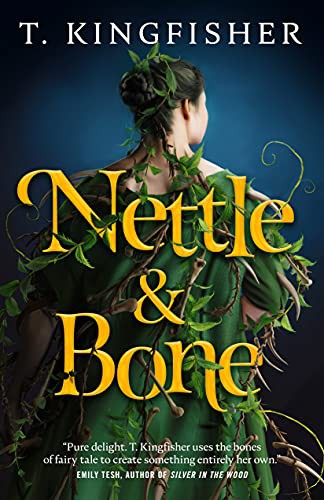
Nettle & Bone 2022
Marra, the youngest of three princesses, builds a dog out of wired-together bones and gathers a band of misfits — a dust-wife, a disgraced knight — to free her sister from a cruel prince. It won the 2023 Hugo for Best Novel, and it is the one we would hand you first.
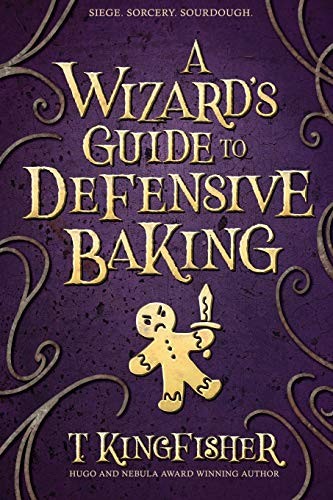
Fourteen-year-old Mona can only work magic on bread and dough — until an assassin starts killing the city's wizards and she answers back with quick wits, animated gingerbread men and a sourdough familiar named Bob. The gentlest way in, and good for any age.
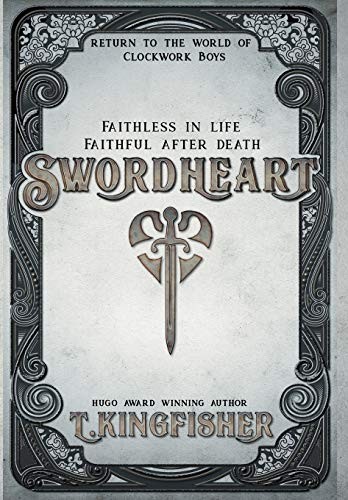
Halla, a widowed housekeeper, accidentally summons Sarkis, an immortal swordsman bound to the enchanted blade she has inherited. A warm, funny fantasy romance set in her World of the White Rat.
Paladin's Grace 2020
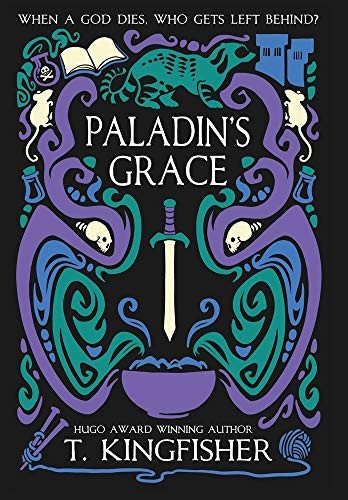
First of the Saint of Steel books. Stephen, a berserker paladin left adrift after his god died, and Grace, a perfumer on the run, fall in love around a murder mystery — cosy, comic romantic fantasy in the same White Rat world.
Thornhedge 2023
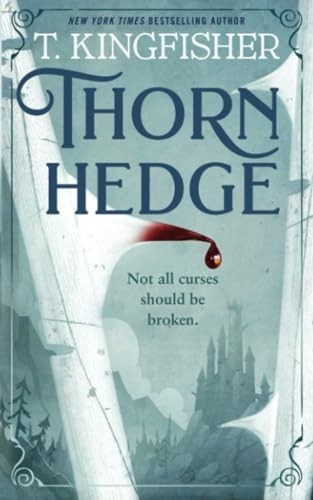
A gentle Sleeping Beauty told from the wrong side of the thorns, following Toadling, a kind fairy raised by frog-like greenteeth, who guards the wall to keep something dangerous asleep. It won the 2024 Hugo for Best Novella.
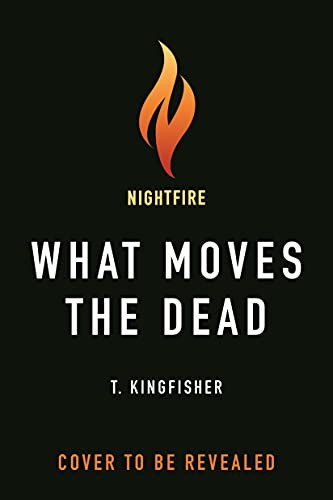
What Moves the Dead 2022
Her gothic turn — a novella reworking Poe's 'The Fall of the House of Usher', with retired soldier Alex Easton, a sinister fungus and the dying Usher siblings by their crumbling lakeside house. More unsettling than cosy; read it when you want a shiver.
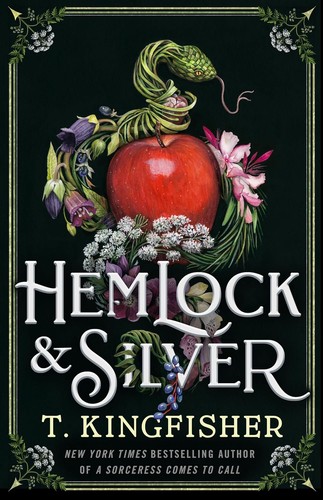
Hemlock & Silver 2025
Her newest, and a darker one — a reworking of Snow White in which Anja, a healer who tests poisons on herself to find cures, is summoned to save the king's dying daughter and uncovers a hidden world inside a magic mirror.
Good questions
What order should you read T. Kingfisher's books in?
Most are standalones, so any order is fine. The exceptions are her linked sets: the Clocktaur War duology (Clockwork Boys, then The Wonder Engine); the Saint of Steel / Paladin novels in publication order (Paladin's Grace, Paladin's Strength, Paladin's Hope, Paladin's Faith), which share the World of the White Rat with Swordheart; and the Sworn Soldier horror novellas, What Moves the Dead then What Feasts at Night.
Are T. Kingfisher's books standalones or part of a series?
Mostly standalones — you need not have read a thing to enjoy any of them. A few sit in shared settings, like the World of the White Rat, but each is written to work perfectly well on its own.
Is T. Kingfisher a pen name, and who is Ursula Vernon?
Yes. T. Kingfisher is the name Ursula Vernon (born 1977) uses for her fantasy, fairy tales and horror aimed at adult and older-teen readers. Under her own name she writes and illustrates children's books and comics — the Hamster Princess and Dragonbreath series, and the Hugo-winning graphic novel Digger.
Are T. Kingfisher's books cosy fantasy or horror?
Both, depending which you pick. The White Rat romances and Nettle & Bone are warm and comic with dark edges; What Moves the Dead and Hemlock & Silver lean properly gothic. We have flagged the unsettling ones in the list above so you can choose your weather.
How steamy are T. Kingfisher's books?
It varies. A Wizard's Guide to Defensive Baking suits all ages, while the White Rat romances — Swordheart, Paladin's Grace and their companions — are adult romantic fantasy. They are warm and funny by design; we will leave you to judge the heat for yourself.
What is T. Kingfisher's newest book?
Hemlock & Silver (2025), a darker reworking of Snow White in which a healer who tests poisons on herself is summoned to save the king's dying daughter and uncovers a hidden world inside a magic mirror.
 Reluctant HeroineFound Family
Nettle & Bone
Reluctant HeroineFound Family
Nettle & Bone